
NewsDetails
Strain Clamp Failure Causes and On-Site Solutions
author:Dachuan time:2026-04-17 16:04:18 Click:108
Strain Clamp Failure Causes and On-Site Solutions
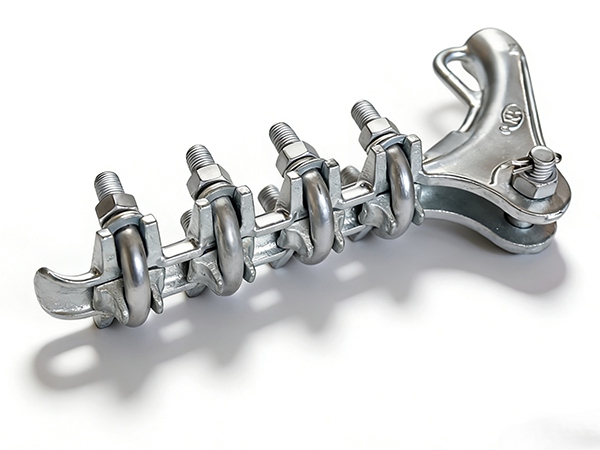
Strain clamps play a critical role in overhead power transmission and distribution systems. They are responsible for securing conductors under mechanical tension, especially at dead-ends, corners, and angle towers. Once a strain clamp fails, it can lead to conductor slippage, line breakage, or even large-scale outages. Understanding the causes of failure and applying effective on-site solutions is essential for maintaining system reliability.
1. Common Causes of Strain Clamp Failure
1.1 Improper Installation
One of the most frequent causes of strain clamp failure is incorrect installation. If the clamp is not tightened to the specified torque or installed at the wrong angle, uneven stress distribution occurs. This can result in conductor slippage or localized mechanical damage.
1.2 Material Defects or Poor Quality
Low-quality materials, such as substandard aluminum alloy or steel, may lack sufficient tensile strength and corrosion resistance. Over time, these materials degrade under mechanical load and environmental exposure, increasing the risk of fracture or deformation.
1.3 Corrosion and Environmental Exposure
Strain clamps are exposed to harsh outdoor environments, including moisture, salt spray, industrial pollution, and temperature fluctuations. Corrosion weakens the structural integrity of the clamp, especially in coastal or high-humidity regions.
1.4 Overloading and Mechanical Stress
Excessive tension caused by long spans, heavy ice loads, or strong winds can exceed the clamp’s rated capacity. Continuous overloading accelerates fatigue and may lead to sudden failure.
1.5 Conductor Creep and Thermal Expansion
Over time, conductors may elongate due to creep or expand and contract with temperature changes. This can reduce the clamping force or cause loosening, eventually leading to slippage.
1.6 Vibration and Fatigue
Aeolian vibration and galloping of conductors can introduce cyclic stress to the clamp. Repeated stress cycles lead to metal fatigue, especially at stress concentration points.
2. On-Site Solutions and Preventive Measures
2.1 Standardized Installation Procedures
Ensure all strain clamps are installed according to manufacturer specifications. Use calibrated torque tools to achieve proper tightening force and maintain correct alignment with the conductor.
2.2 Selection of High-Quality Materials
Choose strain clamps made from high-strength, corrosion-resistant materials such as hot-dip galvanized steel or high-grade aluminum alloy. For harsh environments, consider additional protective coatings.
2.3 Regular Inspection and Maintenance
Conduct periodic inspections to identify early signs of wear, corrosion, or loosening. Thermal imaging and visual checks can help detect abnormal conditions before failure occurs.
2.4 Anti-Corrosion Protection
Apply anti-corrosion coatings or use pre-treated components for installations in coastal, industrial, or high-humidity environments. Reapply protective layers when necessary during maintenance cycles.
2.5 Load Management and Design Optimization
Ensure proper line design to avoid excessive tension. This includes optimizing span length, using appropriate conductor types, and considering environmental load factors such as wind and ice.
2.6 Installation of Vibration Dampers
To reduce fatigue caused by vibration, install vibration dampers near strain clamps. This helps minimize dynamic stress and prolong the service life of both the clamp and conductor.
2.7 Timely Replacement of Damaged Components
If cracks, deformation, or severe corrosion are detected, replace the strain clamp immediately. Temporary fixes should only be used as emergency measures and followed by permanent replacement.
3. Practical On-Site Troubleshooting Tips
If conductor slippage is observed, check bolt torque and re-tighten or replace the clamp.
For visible corrosion, clean the affected area and apply anti-corrosion treatment or replace the component if necessary.
In case of unusual noise or vibration, inspect for fatigue cracks and install dampers.
If deformation is detected, evaluate load conditions and upgrade to a higher-capacity clamp.
Conclusion
Strain clamp failure is typically the result of a combination of installation errors, environmental factors, and mechanical stress. By implementing proper installation practices, selecting high-quality materials, and conducting regular maintenance, most failures can be effectively prevented. On-site personnel should remain vigilant and respond promptly to early warning signs to ensure the long-term safety and reliability of power transmission systems.
References
IEEE Standard for Overhead Line Design and Construction
IEC 61284: Overhead lines – Requirements and tests for fittings
Electric Power Research Institute (EPRI), Transmission Line Reference Manual
CIGRÉ Technical Brochures on Overhead Line Hardware and Maintenance
 Recommended Products
 Contact us
—— Contact:Manager
—— Tel:+86 15631793633
—— Email:960244024@qq.com
—— Url:https://www.dachuan-power.com
—— Address:Liugusi Town, Hejian City, Cangzhou City, Hebei Province, China