
NewsDetails
Common Installation Mistakes of Tension Clamps
author:Dachuan time:2026-04-17 16:07:19 Click:76
Common Installation Mistakes of Tension Clamps
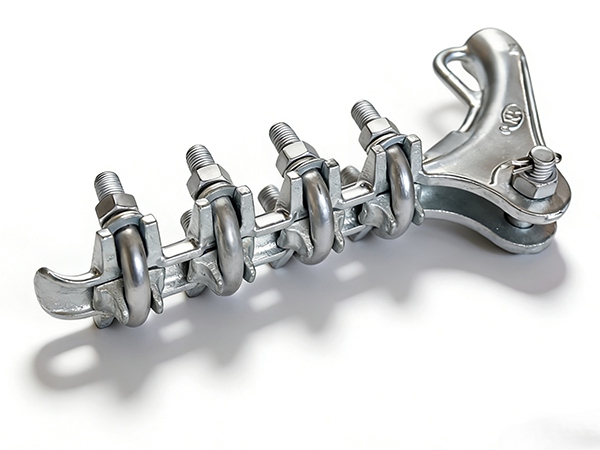
Tension clamps (also known as strain clamps) are essential components in overhead transmission and distribution lines, designed to anchor conductors under mechanical tension at dead-ends and angle points. Proper installation is critical to ensure mechanical stability, electrical continuity, and long-term reliability. However, in practical field operations, several common installation mistakes can significantly reduce performance and lead to premature failure.
1. Insufficient or Excessive Tightening Torque
One of the most frequent errors is improper torque application.
Under-tightening results in inadequate gripping force, leading to conductor slippage.
Over-tightening may deform the clamp or damage the conductor strands, reducing mechanical strength.
Correct Practice:
Always use calibrated torque tools and follow manufacturer-recommended torque values to achieve optimal clamping force.
2. Incorrect Clamp Positioning
Improper alignment between the clamp and conductor can cause uneven stress distribution. Misalignment often leads to localized pressure points, increasing the risk of conductor damage or clamp deformation.
Correct Practice:
Ensure the clamp is installed in line with the conductor’s axis and properly seated without angular deviation.
3. Failure to Clean Contact Surfaces
Installing clamps on dirty, oxidized, or contaminated conductor surfaces reduces friction and electrical conductivity. This can result in overheating and eventual loosening.
Correct Practice:
Clean the conductor surface before installation. Remove oxide layers if necessary and avoid introducing grease or debris unless specified.
4. Reuse of Old or Damaged Components
Reusing clamps, bolts, or nuts that have already experienced mechanical stress or corrosion is a common but risky practice. These components may no longer provide the required strength or reliability.
Correct Practice:
Always use new, undamaged components for installation, especially for critical tension points.
5. Improper Installation of Bolts and Fasteners
Incorrect bolt installation—such as uneven tightening, missing washers, or improper thread engagement—can lead to uneven load distribution and eventual loosening.
Correct Practice:
Tighten bolts evenly in sequence, ensure proper washer placement, and verify full thread engagement.
6. Ignoring Conductor Type and Size Compatibility
Using a tension clamp that does not match the conductor type or diameter can lead to insufficient grip or excessive الضغط on the conductor.
Correct Practice:
Select clamps specifically designed for the conductor type and size to ensure proper fit and performance.
7. Lack of Anti-Vibration Measures
In areas prone to wind-induced vibration, failing to install vibration dampers or armor rods can accelerate fatigue damage at the clamp location.
Correct Practice:
Install appropriate vibration control devices based on line design and environmental conditions.
8. Overlooking Environmental Protection
Neglecting anti-corrosion measures in harsh environments (coastal, industrial, or high-humidity areas) can lead to rapid degradation of clamp components.
Correct Practice:
Use corrosion-resistant materials and apply protective coatings where necessary.
9. Improper Installation Sequence
Incorrect installation order, such as tightening one side completely before the other, can create uneven الضغط and misalignment.
Correct Practice:
Follow a balanced, step-by-step tightening sequence to ensure uniform load distribution.
10. Lack of Final Inspection
Skipping post-installation inspection can leave unnoticed issues such as loose bolts, misalignment, or incomplete assembly.
Correct Practice:
Conduct a thorough final check, including torque verification, alignment inspection, and visual assessment.
Conclusion
Most tension clamp failures can be traced back to installation errors rather than product defects. Common mistakes such as improper torque, misalignment, and poor surface preparation can significantly compromise performance. By following standardized installation procedures, using appropriate tools, and conducting thorough inspections, these issues can be effectively avoided, ensuring the long-term safety and reliability of overhead line systems.
References
IEC 61284: Overhead lines – Requirements and tests for fittings
IEEE Guide for Overhead Transmission Line Construction Practices
CIGRÉ Technical Brochures on Line Hardware Installation
Electric Power Research Institute (EPRI), Transmission Line Installation and Maintenance Guidelines
 Recommended Products
 Contact us
—— Contact:Manager
—— Tel:+86 15631793633
—— Email:960244024@qq.com
—— Url:https://www.dachuan-power.com
—— Address:Liugusi Town, Hejian City, Cangzhou City, Hebei Province, China